
Packing for a House Move: A Practical System That Works
Moving house is stressful enough without the added chaos of discovering on unpacking day that your plates are mixed with your paperwork and nobody labelled the box containing the kettle. A simple packing system saves hours of frustration at both ends of the move.
Start packing well before moving day — at least two weeks for a typical house. Begin with rooms and items you use least: books, ornaments, seasonal clothes, and stored belongings. Leave daily essentials — the kettle, mugs, toiletries, phone chargers, bedding — until the last morning, and pack them in a clearly marked "open first" box that travels with you rather than on the lorry.
Box Sizing and Labelling
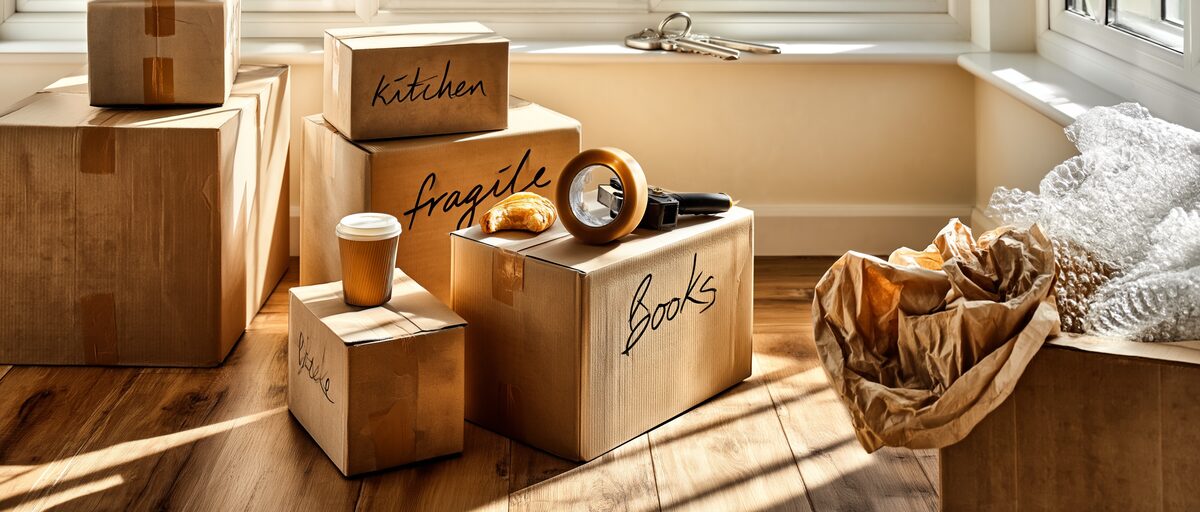
Use small boxes for heavy items like books and crockery, and large boxes for light, bulky items like bedding, cushions, and towels. This seems obvious but is consistently ignored, resulting in boxes that are either too heavy to carry or too fragile to stack. Label every box on the top and at least one side with the room it belongs to and a brief contents summary. Coloured tape or stickers — one colour per room — allow the removal team to place boxes in the right room without reading every label.
Protecting Fragile Items
Bubble wrap is the most reliable protection for plates, glasses, and ornaments. Wrap each item individually and pack tightly so nothing shifts inside the box. For plates, stand them vertically like records rather than stacking flat — they are far less likely to crack under pressure from above. Scrunched packing paper fills voids better than newspaper (which transfers ink) and cushions the top layer before the box is sealed. A box of fragile items should not rattle when shaken gently. If it does, add more padding.