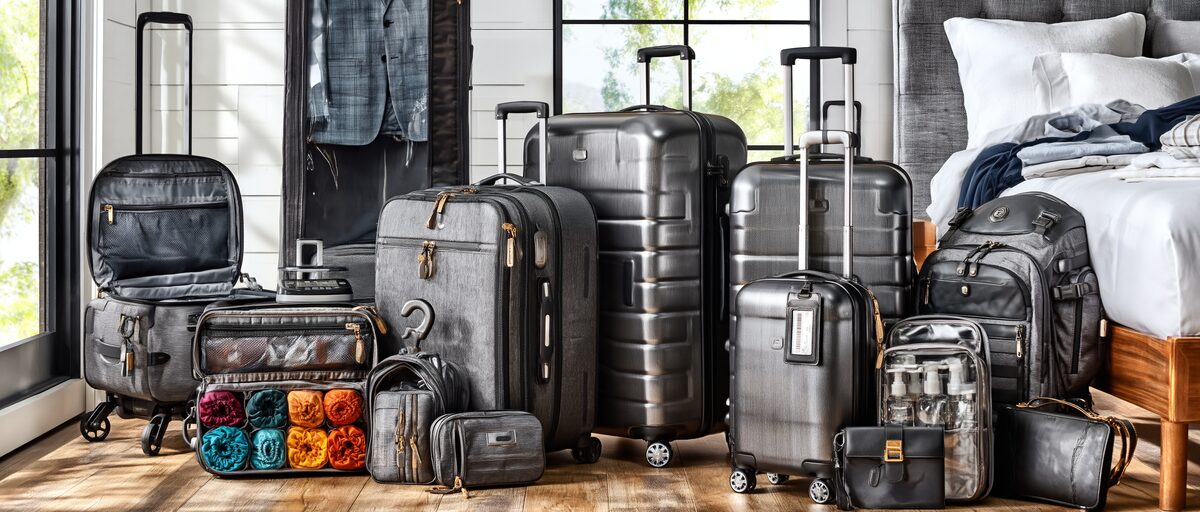
Choosing Luggage: Hard Shell versus Soft Shell
The hard-shell-or-soft debate has no single right answer. Each type has genuine advantages, and the best choice depends on how you travel.
Hard shell suitcases — typically polycarbonate or ABS plastic — protect fragile contents, resist water, and are easy to wipe clean. They hold their shape when stacked in an aircraft hold or on a luggage carousel. The trade-off is rigidity: they cannot flex to squeeze into a tight overhead locker, and they offer no external pockets for quick access to documents or a water bottle.
The Case for Soft Shell
Soft shell luggage is made from woven nylon or polyester and usually weighs less than an equivalent hard case. It flexes to fit into awkward spaces, expands via zip compartments when you buy more than you planned, and typically includes external pockets that are genuinely useful at the airport. The downside is vulnerability — soft cases offer less protection against impact and are harder to keep clean.
Wheels and Handles
Four-spinner wheels roll in any direction and are effortless on smooth airport floors. Two-wheel cases tilt and pull, which is more stable on rough pavements and cobblestones. The telescopic handle should lock at multiple heights — too short and you stoop, too tall and the case wanders. Test the handle before committing: a wobbly mechanism will only get worse with use.
Cabin Size Rules
Airlines set their own cabin baggage dimensions, and there is no universal standard. Most budget carriers allow 55 × 40 × 20 cm including wheels and handles, but some are smaller. Measure the case fully assembled — manufacturer claims of "cabin compatible" do not always account for wheels, handles, and bulging pockets. A suitcase that fits one airline's overhead bin may be rejected by another.