Discover Games & Toys for Every Age on Amazon

Games and toys for every age banner

Games and toys is one of the most joyful departments on Amazon, covering everything from a baby's first rattle to complex strategy board games that adults play for decades. Whether you are looking for a birthday present for a toddler, educational toys that make learning feel like play, outdoor equipment for active children, a family board game for rainy afternoons, or building sets that challenge teenagers and adults alike, this department has something for every age, every interest, and every budget.

This page organises nearly seventy categories of toys and games into clear sections โ€” baby and toddler, board games and puzzles, building and construction, dolls and figures, imaginative play, outdoor fun, educational and STEM, arts and creative, and more. Each button routes you directly to the relevant section of your local Amazon store.

Between the product sections you will find practical articles with honest guidance on choosing toys that genuinely engage children, understanding what matters at different developmental stages, and why play is so much more than entertainment. Use the search bar above to find something specific, or browse by department below.

Disclosure: This site participates in the Amazon Associates Programme. As an Amazon Associate we earn from qualifying purchases. This helps support our free versions of the Memory Cube app - an interactive 3D photo and video display, with lightbox and online jigsaw puzzle game.

Shop Games & Toys on Amazon

Baby and toddler toys, board games, puzzles, building sets, dolls, figures, imaginative play, STEM and educational, arts and creative, outdoor play, wooden toys, tech and more

Board games, card games, strategy, puzzles, building blocks, magnetic tiles, marble runs, model kits and construction sets

Dolls, figures, soft toys, dress-up, play kitchens, train sets, vehicles, arts and crafts, drawing, musical instruments and creative tech

Outdoor play equipment, sports, garden games, bikes, scooters, ride-on toys, wooden toys, tablets, travel toys and storage

Baby and Toddler toys and games

Baby and Toddler Toys

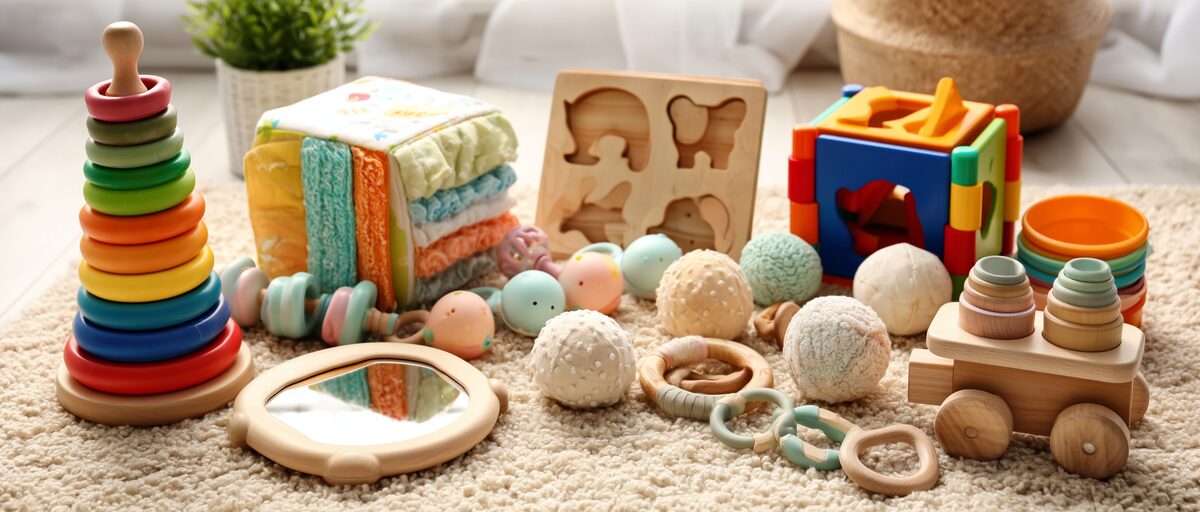
First-year toys, bath toys, shape sorters, sensory toys, toddler toys and books

Why Play Is the Most Important Work Children Do

To an adult watching from the sofa, a child building a tower of blocks and knocking it down for the twentieth time might look like aimless repetition. A group of children arguing about the rules of an invented game might seem like chaos. A toddler spending forty minutes posting shapes into a sorter, retrieving them, and starting again might appear to be stuck in a loop. But in every one of these moments, something remarkable is happening โ€” the child is learning.

Play is not a break from learning; it is the primary mechanism through which young children make sense of the world. Through physical play, they develop motor skills, spatial awareness, and an intuitive understanding of cause and effect. Through imaginative play, they process emotions, practise social roles, and develop the narrative thinking that will later underpin reading comprehension and creative writing. Through construction play, they encounter engineering principles โ€” balance, weight distribution, structural integrity โ€” long before they have the vocabulary to describe them.

The research on this is extensive and consistent. Children who have rich, varied play experiences develop stronger problem-solving skills, better emotional regulation, more advanced language, and greater social competence than those whose play is limited or heavily directed by adults. This does not mean expensive toys or structured activities โ€” some of the most developmentally valuable play involves nothing more than cardboard boxes, sticks, water, sand, and the child's own imagination.

The Role of the Toy

The best toys are not necessarily the most complex or the most expensive. They are the ones that invite the child to bring something of themselves to the experience. A set of wooden blocks can become a castle, a city, a bridge, a spaceship, or an abstract sculpture depending on the child's mood, age, and imagination. A doll can be a baby to nurture, a patient to doctor, a character in an elaborate story, or a companion on an adventure. These open-ended toys grow with the child, offering new possibilities as the child's capabilities and imagination develop.

Screen Time and Physical Play

In an age of screens, physical toys and games serve an additional function: they engage the body as well as the mind. Building with blocks develops fine motor control. Running, climbing, and riding develop gross motor skills and physical confidence. Board games teach turn-taking, graceful losing, and strategic thinking in a way that solitary screen-based games often do not. None of this means screens are harmful โ€” but a balance between digital and physical play serves children best, and the physical toys available today are more imaginative and engaging than at any point in history.
Board Games and Puzzles

Board Games and Puzzles

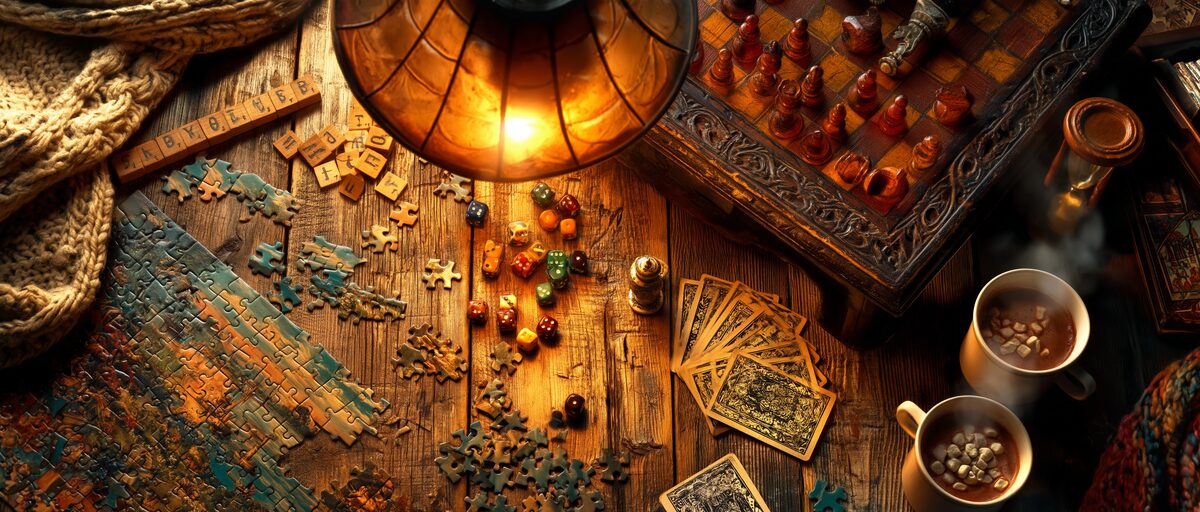
Family games, strategy games, card games, chess, jigsaw puzzles, word games and party games

Why Board Games Are More Popular Than Ever

Something unexpected has happened over the past fifteen years. In an era defined by digital entertainment โ€” streaming services, social media, gaming consoles โ€” the humble board game has experienced a genuine renaissance. More board games are being designed, published, and sold today than at any previous point in history, and the quality and variety of what is available has transformed almost beyond recognition.

The board games most adults remember from childhood โ€” the ones that relied heavily on dice rolls and had a frustrating tendency to drag on long past the point of enjoyment โ€” represent a tiny and unrepresentative fraction of what the hobby now offers. Modern board game design has become remarkably sophisticated. Games exist for every taste: cooperative games where all players work together against the game itself, deduction games where you piece together hidden information, engine-building games where you construct increasingly powerful combinations of resources, and dexterity games that have everyone laughing within minutes.

Playing time has been rethought too. While epic games that span entire afternoons still exist for those who want them, many of the most celebrated modern designs play in thirty to sixty minutes โ€” short enough for a weeknight, engaging enough to leave everyone wanting another round. This accessibility has been crucial to the hobby's growth.

Family Games Have Grown Up

The family game category has been particularly transformed. The best modern family games manage a delicate balance: simple enough for a seven-year-old to understand, strategic enough for adults to find genuinely engaging. These are games where parents do not need to pretend to enjoy themselves โ€” the enjoyment is real, the decisions meaningful, and the interaction genuine. Finding a game that the whole family looks forward to playing together is one of the most valuable purchases a household can make, pound for pound.

Games for Two

The two-player game category has exploded in recent years, recognising that couples and friends who want a shared analogue activity should not be limited to chess and Scrabble โ€” excellent though those are. Compact, cleverly designed games for two offer an evening's entertainment that costs less than a cinema ticket and can be replayed dozens of times, with each session playing out differently. For anyone looking for a screen-free way to spend time with another person, the current golden age of two-player games is a genuine gift.

Building and Construction games and puzzles

Building and Construction

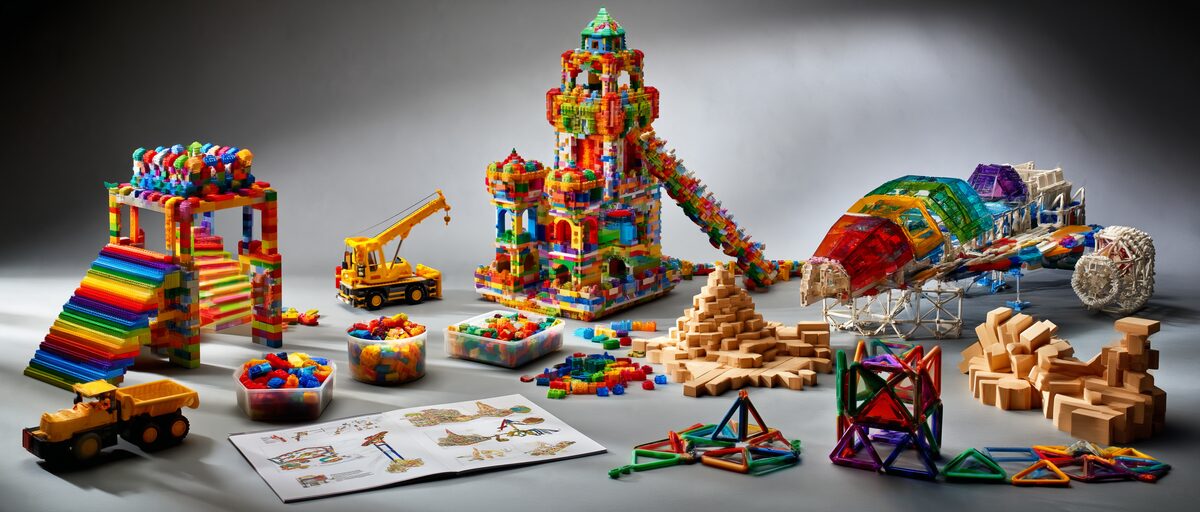
Building blocks, magnetic tiles, marble runs, model kits and construction sets

Dolls, Figures & Soft Toys

Dolls, dollhouses, action figures, collectibles, stuffed animals, puppets and robotic plush

What Children Actually Need at Different Stages

The age recommendations on toy packaging exist partly for safety and partly as developmental guidance, but they tell only a fraction of the story. Understanding what children need from their play at each stage helps you choose toys that genuinely engage and support them, rather than sitting unused because they were too advanced, too simple, or simply did not match the child's current interests.

Babies in their first year are driven by sensory exploration. They need things to grasp, mouth, shake, and stare at. High contrast patterns fascinate newborns whose vision is still developing. Textured toys and crinkle fabrics engage their emerging sense of touch. Simple cause-and-effect toys โ€” press a button, hear a sound โ€” teach them that their actions produce results in the world. At this stage, complexity is the enemy of engagement. A single rattle that makes a satisfying sound will hold a baby's attention longer than an elaborate electronic toy with too many features to process.

Toddlers: The Explorers

Between one and three, children are in a period of explosive physical and cognitive development. They are learning to walk, climb, manipulate objects with increasing precision, and understand that things have names. Shape sorters, stacking toys, simple puzzles, and push-along toys align perfectly with these emerging capabilities. Water play, sand play, and play dough offer sensory experiences that toddlers find endlessly fascinating. At this stage, repetition is not boredom โ€” it is mastery. A toddler who fills and empties a container fifty times in succession is conducting serious research into volume, gravity, and the properties of materials.

Preschoolers: The Imaginers

Between three and five, imaginative play takes centre stage. Play kitchens, dress-up clothes, dolls, toy animals, and vehicles become props in elaborate stories that children create and direct. Construction toys begin to be used not just for building and demolishing but for creating specific structures with purpose. Simple board games introduce concepts of rules, turn-taking, and the social experience of structured play with others. Art supplies โ€” crayons, paints, play dough, collage materials โ€” allow self-expression that matters enormously to children who are just beginning to understand that they have a perspective worth sharing.

School Age and Beyond

Once children start school, their interests diversify dramatically. Some become passionate about construction and engineering, spending hours with complex building sets. Others discover board games and card games, developing strategic thinking and social skills simultaneously. Still others are drawn to science kits, coding toys, or creative arts. The key at this stage is following the child's genuine interests rather than imposing what you think they should enjoy. A child who is fascinated by miniature worlds and detailed figures is developing spatial reasoning, narrative skills, and patience โ€” abilities as valuable as those developed by a child doing science experiments, just in a different form.

Imaginative Play

Dress-up, play kitchens, train sets, toy vehicles and remote-control toys

Educational & STEM

Science kits, coding toys, robotics, maths toys, reading toys and electronic learning

Choosing Gifts That Children Actually Play With

Choosing Gifts That Children Actually Play With

Every parent knows the experience: a carefully chosen, enthusiastically wrapped present is opened with excitement on a birthday morning, played with for twenty minutes, and then abandoned in favour of the cardboard box it came in. While this is a universal part of childhood, there are patterns to the toys that endure and the ones that do not, and understanding these patterns makes gift-giving both more satisfying and more economical.

Toys that offer a single, fixed experience โ€” press a button, watch something happen โ€” tend to have the shortest lifespan in a child's affections. The novelty of the response fades quickly once the child understands the mechanism. By contrast, toys that can be used in multiple ways, that reward imagination and invention, tend to remain in rotation for months or years. A set of building blocks, a collection of toy animals, a well-made doll with a few accessories, a quality art set โ€” these are gifts that grow with the child because the child brings something new to them each time.

Ask the Parents

If you are buying for someone else's child, resist the temptation to surprise and instead ask the parents what the child is currently interested in. Children's passions can be intense and specific โ€” a child obsessed with dinosaurs will light up at any dinosaur-related toy, while an equally wonderful gift unrelated to their current passion may receive a polite thank-you and nothing more. Parents also know what the child already owns, preventing the awkwardness of duplicate gifts and the frustration of buying something the family does not have space for.

Quality Over Quantity

Research consistently shows that children with fewer, higher-quality toys play more creatively and for longer periods than those surrounded by an overwhelming abundance of options. Too many toys creates a paradox of choice that leads children to flit between items without engaging deeply with any of them. A single, well-chosen gift โ€” something that matches the child's interests, suits their developmental stage, and is made well enough to withstand enthusiastic use โ€” will bring more joy than a pile of cheaper alternatives.

Arts & Creative

Children's art supplies, craft kits, modelling clay, easels, musical instruments and cameras

Outdoor Play

Climbing frames, trampolines, garden games, water toys, bikes, scooters, ride-on toys and nature exploration

The Surprising Value of Letting Children Be Bored

In a world where every moment can be filled with entertainment, the idea of allowing a child to experience boredom might seem negligent. But developmental psychologists and educators increasingly argue that boredom โ€” genuine, unstructured, nothing-to-do boredom โ€” is not something to be avoided. It is something to be protected.

When children run out of external stimulation, something interesting happens. After the initial complaints and restlessness โ€” which can try any parent's patience โ€” they begin to generate their own entertainment. They invent games. They create stories. They notice things in their environment that they had previously overlooked. They develop the ability to be alone with their own thoughts, a skill that many adults have never properly acquired and that is becoming increasingly rare in a culture of constant connectivity.

This is not an argument against toys, games, or structured activities โ€” all of which have genuine value. It is an argument for balance. A child whose every waking moment is scheduled, entertained, or directed by adults never develops the internal resources to manage their own time and attention. The creativity that emerges from boredom is qualitatively different from the creativity that emerges from following instructions or engaging with pre-designed experiences. It is more personal, more surprising, and more deeply the child's own.

Fewer Toys, More Play

Paradoxically, reducing the number of available toys often increases the quality and duration of play. When a child has access to a manageable selection of versatile, well-chosen toys, they engage more deeply with each one. When surrounded by dozens of options, they tend to pick up one item after another without settling into the kind of sustained, imaginative play that is most developmentally valuable. Rotating toys โ€” keeping some in storage and swapping them periodically โ€” can give existing toys the novelty of new ones while keeping the total available number manageable.

Wooden Toys, Tech & Practical

Wooden toys, children's tablets, headphones, travel toys, toy safety and storage

Ready to play?

You've Found the Ideas.
Now Find the Perfect Toy.

Thousands of toys and games across nearly seventy categories โ€” from first baby toys to family board games, outdoor adventures to building sets โ€” all ready to browse on Amazon.

Free delivery options available Deals change daily โ€” today's won't last Trusted by millions of shoppers worldwide