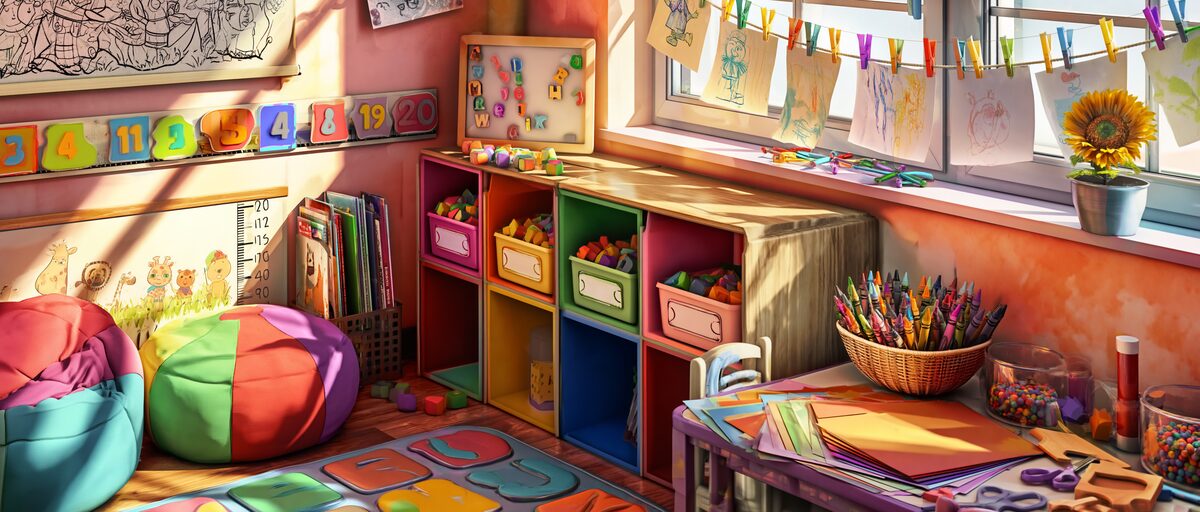
The Value of Creative Play in the Kindergarten Years
When a young child paints, cuts, glues, and builds, they are not just making a mess — they are developing fine motor control, spatial awareness, problem-solving skills, and the confidence to experiment without fear of getting it wrong.
Creative activities in the early years build neural pathways that support later academic learning. Cutting with scissors strengthens the same hand muscles needed for writing. Mixing paint colours teaches cause and effect. Following a simple craft instruction develops sequencing and listening skills. The process matters far more than the finished product — a lopsided collage made with full concentration is more valuable than a perfect template completed with adult help.
Open-Ended versus Structured Crafts
Both types of creative activity have a place. Open-ended play — a box of materials with no set outcome — develops imagination and independent thinking. A child given paper, glue, and a pile of feathers will invent something entirely their own. Structured crafts — making a specific animal, card, or decoration — build the ability to follow instructions, plan steps, and achieve a goal. The best kindergarten environments offer both: directed activities during group time and free access to art materials during play.
Keeping It Simple
Young children do not need expensive or elaborate craft supplies. Cardboard boxes, egg cartons, kitchen roll tubes, fabric scraps, and natural materials like leaves and pine cones provide more creative opportunity than a pre-packaged kit. The essentials are good-quality washable paints, a variety of paper, PVA glue, safety scissors, and crayons or chunky markers. With these basics available, most children will find something to make without being told what to do.