Understanding Engine Oil: What the Numbers Mean and Why It Matters
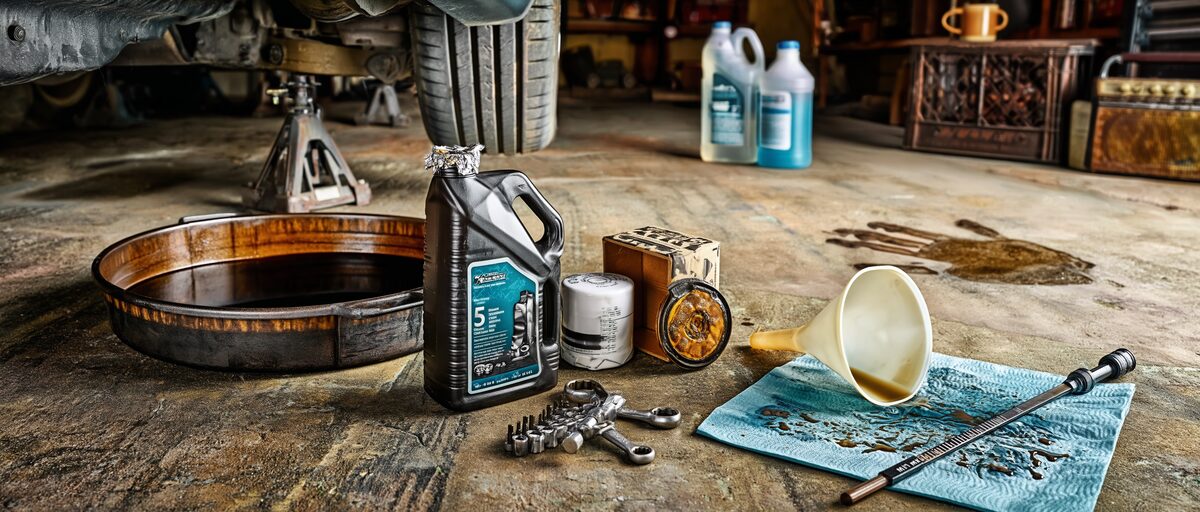
Engine oil is the single most important consumable in your car. It lubricates moving parts, reduces friction, carries heat away from the engine, and suspends microscopic particles of wear debris so they can be trapped by the oil filter. Using the wrong oil — or neglecting to change it — is one of the quickest ways to shorten an engine's life.
The numbers on an oil bottle — 5W-30, 0W-40, 10W-40 — describe its viscosity, which is a measure of how thick or thin the oil is at different temperatures. The first number followed by "W" (for winter) indicates how the oil flows when cold. A lower number means it flows more easily at low temperatures, which matters for cold starts when the engine needs lubrication immediately. The second number indicates viscosity at operating temperature. A higher number means thicker oil at running temperature, which provides more protection under heavy loads. Your vehicle's handbook specifies which grade to use — this is not a suggestion but an engineering requirement. Modern engines with tight tolerances are designed around specific oil weights, and using a thicker oil because it feels "more protective" can actually starve narrow oil galleries and increase fuel consumption.
Fully Synthetic, Semi-Synthetic, or Mineral
Fully synthetic oils are manufactured to precise molecular specifications and offer superior performance at extreme temperatures, longer intervals between changes, and better protection under demanding conditions. Semi-synthetic blends combine synthetic and mineral base stocks at a lower cost, offering a middle ground. Mineral oils — the traditional option — are adequate for older engines with wider tolerances but are increasingly uncommon as manufacturers specify synthetic oils for newer vehicles. The difference in cost between mineral and fully synthetic oil is typically modest when measured per oil change, and the superior protection makes synthetic the better choice for most modern vehicles. Check your handbook, buy the specified grade, and change it at the recommended interval. It is the cheapest insurance your engine will ever have.