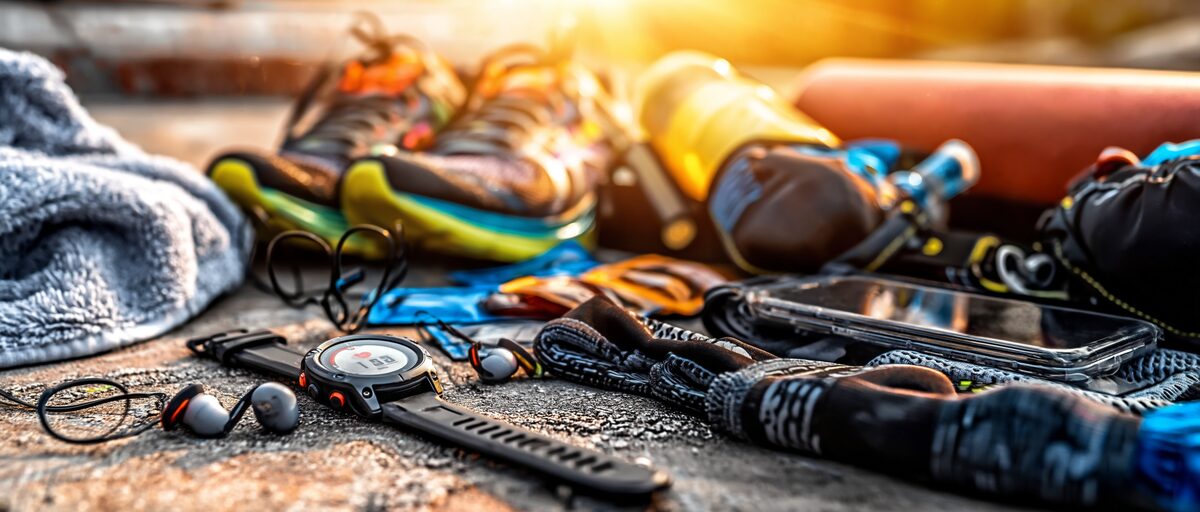
Buy Sports and Fitness Products on Amazon

Sports and fitness equipment banner

Sports and fitness is one of the largest and most varied departments on Amazon, covering everything from a simple pair of running shoes to a fully equipped home gym. Whether you play team sports at the weekend, train alone in your garage, cycle to work, swim lengths at your local pool, or simply want to move more and feel better, there is equipment here that matches your level and your budget.

This page organises more than seventy categories of sports and fitness products into clear sections โ€” home gym and cardio equipment, strength training, running, cycling, team sports, racket sports, water sports, combat sports, winter sports, golf, and more. Each button routes you directly to the relevant section of your local Amazon store, wherever you are in the world.

Use the search bar above to find something specific, or browse by department below to see what is available. We have also included honest, practical guides between the product sections โ€” not sales pitches, but genuine advice to help you make better decisions about the equipment you buy.

Disclosure: This site participates in the Amazon Associates Programme. As an Amazon Associate we earn from qualifying purchases. This helps support our free versions of the Memory Cube app - an interactive 3D photo and video display, with lightbox and online jigsaw puzzle game.

Shop Sports & Fitness on Amazon

Running, gym equipment, cycling, team sports, water sports, combat sports, yoga, golf and more

Road bikes, mountain bikes, electric bikes, helmets, clothing and accessories

Football, rugby, basketball, cricket, hockey, volleyball, baseball and American football

Tennis, badminton, table tennis, squash and pickleball

Swimming, paddleboarding, kayaking, diving, surfing and wetsuits

Boxing, martial arts, MMA and fencing

Clubs, bags, balls, clothing, shoes, rangefinders and accessories

Skiing, snowboarding and ice skating

Skateboarding, roller skating, scooters and climbing

Darts, archery, pool, snooker and billiards

Rods, reels, tackle, clothing and accessories

Building a Home Gym: Practical Advice for Every Budget

The idea of training at home has never been more appealing. No commute, no waiting for equipment, no monthly membership fees creeping upward year after year. But the difference between a home gym that transforms your fitness and one that becomes an expensive clothes horse often comes down to a few simple decisions made before you spend a penny.

The most common mistake people make is starting with the largest, most expensive piece of equipment they can find. A commercial-grade treadmill or a multi-station gym system feels like a statement of intent, but intent alone does not build habits. The most successful home gyms are built gradually, starting with versatile equipment that matches how you actually train โ€” not how you imagine training in your most optimistic moments.

If you are genuinely starting from nothing, a set of resistance bands, a single kettlebell, and an exercise mat will take you surprisingly far. These three items occupy almost no space, cost relatively little, and between them support hundreds of exercises covering every major muscle group. Many experienced trainers would argue that a motivated person with just these basics can build more functional strength than someone with a room full of machines they only half understand.

Growing Your Setup Over Time

Once you have established a consistent routine โ€” and this is the crucial part, consistency first, equipment second โ€” you can expand based on genuine need. If you find yourself wanting heavier loads, adjustable dumbbells offer remarkable versatility in a compact footprint. If cardio is your focus, consider what you will actually use: a rowing machine works more muscles than almost any other cardio device and folds away neatly, while an exercise bike lets you train while watching television, which for many people is the secret to consistency.

Space matters more than most people acknowledge. Measure your available area before shopping, and remember that you need room to move around equipment, not just room for the equipment itself. A power rack is wonderful if you have the ceiling height and floor space, but a pair of adjustable dumbbells and a sturdy bench will serve most people just as well in half the space.

The Floor Beneath Your Feet

One detail that is almost always overlooked is flooring. Dropping weights on a bare floor damages both the floor and the weights. Gym flooring tiles or thick rubber mats protect your surfaces, reduce noise for anyone living below you, and provide a more comfortable, stable surface for exercises like deadlifts and squats. This is not a glamorous purchase, but experienced home gym owners will tell you it is one of the most important ones.

Cycling

Road bikes, mountain bikes, electric bikes, helmets, clothing and accessories

Why Warming Up Is Not Optional โ€” and How Most People Get It Wrong

Almost everyone knows they should warm up before exercise. Almost nobody does it properly. The typical approach โ€” a few half-hearted stretches held for ten seconds while thinking about the workout ahead โ€” achieves remarkably little. Understanding what a warm-up actually does, physiologically, changes how you approach those first few minutes and can genuinely reduce your injury risk.

When you begin exercising cold, your muscles are literally stiffer. Muscle tissue at rest has less blood flow, lower temperature, and reduced elasticity. Tendons and ligaments are less pliable. Synovial fluid in your joints โ€” the biological equivalent of machine oil โ€” is thicker and less effective. Asking your body to perform explosive or heavy movements in this state is like driving a car hard the moment you turn the ignition on a freezing morning. It will work, probably, but the wear is greater than it needs to be.

An effective warm-up raises your core body temperature gradually, increases blood flow to the muscles you are about to use, and takes your joints through their full range of motion under light load. This does not require complicated routines or specialist equipment. Five to ten minutes of progressive movement โ€” starting gently and building toward the intensity of your main session โ€” is sufficient for most activities.

Static Stretching: The Misunderstood Tool

The research on static stretching before exercise has shifted considerably over the past two decades. Holding a muscle in a lengthened position for thirty seconds or more before explosive activity can actually reduce power output temporarily. This does not mean stretching is harmful โ€” it means the timing matters. Dynamic movement that mimics your upcoming activity is more effective as a warm-up. Static stretching has genuine value, but it belongs after your session when your muscles are warm and receptive, helping to maintain flexibility and support recovery.

Cooling Down: The Forgotten Half

If warming up is neglected, cooling down is practically invisible. Yet gradually reducing your intensity over five to ten minutes after exercise helps your cardiovascular system return to its resting state smoothly, prevents blood pooling in your extremities (which can cause dizziness), and gives you an opportunity for that post-exercise stretching that genuinely does improve flexibility over time. It also provides a psychological transition โ€” a signal to your body and mind that the hard work is done, which many athletes find helps with sleep quality and next-day recovery.

Team Sports

Football, rugby, basketball, cricket, hockey, volleyball, baseball and American football

How to Choose a Sport That Actually Sticks

The fitness industry has a retention problem that nobody talks about honestly. Gyms sell memberships knowing that a significant proportion of new members will stop attending within months. Equipment manufacturers understand that many purchases end up unused. The problem is rarely motivation โ€” it is misalignment between the activity and the person.

Choosing the right sport or fitness activity is less about what burns the most calories or what is currently trending, and more about understanding yourself honestly. Do you thrive on competition, or does pressure make exercise feel like work? Do you prefer training alone with your thoughts, or does the social element of a team sport keep you coming back? Are you drawn to skill-based activities where improvement is gradual and measurable, or do you prefer the straightforward satisfaction of physical effort?

These are not trivial questions. Someone who craves social connection will struggle to maintain a solitary running habit no matter how much they admire the idea of it. Equally, a naturally introverted person may find team sports draining rather than energising, even if they enjoy the physical aspects. The most sustainable exercise habit is the one that aligns with your temperament, your schedule, and your genuine interests โ€” not the one that looks best on paper.

The Power of Trying Everything

If you are uncertain, the best approach is experimentation without commitment. Most sports have relatively low entry costs for beginners. A badminton racket costs very little. A pair of swimming goggles is a minimal investment. A basic yoga mat opens up an entire discipline. Trying several activities over a few months, with genuine openness rather than predetermined expectations, often reveals preferences you did not know you had.

Age Is Less of a Barrier Than You Think

There is a persistent myth that certain sports must be started young. While elite competition in some disciplines does favour those who began in childhood, recreational participation has no such deadline. People take up swimming, cycling, martial arts, golf, climbing, and countless other activities in their forties, fifties, sixties, and beyond โ€” often discovering a passion that enriches their remaining decades. The body is remarkably adaptable at any age when given consistent, appropriate stimulus. The only genuinely bad time to start is never.

Racket Sports

Tennis, badminton, table tennis, squash and pickleball

Water Sports

Swimming, paddleboarding, kayaking, diving, surfing and wetsuits

Why Cheap Equipment Can Cost You More Than Money

There is a natural instinct, especially when starting a new sport or fitness routine, to spend as little as possible on equipment. The reasoning is sound on the surface โ€” why invest heavily in something you might abandon? But there is an important distinction between being sensibly cautious with your money and buying equipment so poor that it actively undermines your experience.

Consider running shoes. A poorly constructed shoe that fails to support your foot properly does not just feel uncomfortable โ€” it changes your gait, places abnormal stress on your joints, and can lead to injuries that take weeks or months to resolve. The money saved on the shoes is quickly dwarfed by the cost of physiotherapy, the frustration of enforced rest, and the risk that the negative experience discourages you from running altogether.

The same principle applies across most sports equipment. A yoga mat that slides on a hard floor is not merely annoying โ€” it creates a genuine injury risk during balance poses. A bicycle helmet that fits poorly provides a false sense of security while offering reduced protection in the event of a fall. Resistance bands made from inferior rubber can snap unexpectedly, and the consequences of that failure during a loaded exercise are not trivial.

The Middle Ground

None of this means you need the most expensive option in every category. The relationship between price and quality in sports equipment is not linear. There is typically a significant quality jump from the cheapest tier to the mid-range, but the improvement from mid-range to premium is often marginal for recreational users โ€” refinements in weight, aesthetics, or performance characteristics that matter to competitive athletes but make little practical difference to someone training for general fitness.

The smart approach is to buy mid-range equipment in categories where quality directly affects safety or your body's interaction with the product โ€” shoes, helmets, mats, and anything load-bearing. For accessories and supplementary items โ€” water bottles, bags, clothing โ€” the budget options are often perfectly adequate. This targeted approach lets you protect yourself where it matters while keeping overall spending reasonable.

Combat Sports

Boxing, martial arts, MMA and fencing

Golf

Clubs, bags, balls, clothing, shoes, rangefinders and accessories

What Regular Movement Does for Your Mind

The physical benefits of exercise are well documented and widely understood โ€” stronger muscles, healthier heart, better sleep, improved mobility. But the mental and emotional benefits, while increasingly recognised by researchers, are still underappreciated by most people who exercise primarily to change how their body looks rather than how their mind feels.

The immediate effect of moderate exercise on mood is remarkable and consistent. Within minutes of sustained physical activity, your brain begins releasing endorphins โ€” natural chemicals that reduce pain perception and create a sense of wellbeing. This is not subtle. People who exercise regularly can typically identify the point during a session where their mood noticeably shifts, where problems that seemed overwhelming before they started moving begin to feel manageable.

But the long-term effects are arguably more significant. Regular physical activity has been shown to reduce symptoms of anxiety and depression with an effectiveness that rivals medication in mild to moderate cases. It improves cognitive function, including memory and the ability to concentrate. It enhances sleep quality โ€” not just duration, but the depth and restorative nature of sleep. It builds self-efficacy, that quiet confidence that comes from setting a physical goal and achieving it, which tends to spill over into other areas of life.

The Social Dimension

Team sports and group activities add another layer entirely. The social bonds formed through shared physical effort have a quality that is difficult to replicate in other settings. There is something about struggling together โ€” pushing through the final minutes of a match, encouraging each other through a difficult training session, sharing the satisfaction of gradual improvement โ€” that builds genuine connection. For people who struggle with loneliness or social isolation, joining a sports club or fitness group can be genuinely life-changing, providing both structure and community.

Exercise as Routine, Not Punishment

Perhaps the most important shift in thinking is to view exercise not as punishment for eating, not as an obligation to your future self, but as something you do because it makes today better. When you finish a run, a swim, a game of tennis, or a yoga session, you feel better than when you started. That is reason enough. The long-term health benefits are a bonus โ€” the real reward is the immediate improvement in how you experience your day.

Winter Sports

Skiing, snowboarding and ice skating

Action & Wheel Sports

Skateboarding, roller skating, scooters and climbing

Timing Your Purchase: When Sports Equipment Costs Less

Sports equipment pricing follows patterns that, once understood, can save you significant amounts of money without compromising on quality. Unlike technology, where products genuinely improve with each generation, most sports equipment changes incrementally from year to year โ€” the same materials, the same manufacturing processes, with minor cosmetic updates and marketing-driven "innovations" that rarely affect performance.

Seasonal timing is the most reliable way to find better value. Winter sports equipment drops substantially in price during spring and summer, when demand falls and retailers clear inventory. Running shoes from the previous season often appear at thirty to forty percent below their original selling price when the new colourway launches โ€” the shoe itself is identical, only the colours have changed. Golf equipment follows a similar cycle, with the most significant discounts appearing in late autumn as manufacturers prepare for the following year's range.

Amazon's Pricing Rhythm

Amazon's own pricing fluctuates more than many shoppers realise. Products regularly discount during promotional events throughout the year, and prices can shift based on inventory levels and competition. Patient buyers who track prices over time or set alerts for specific products often secure significantly better deals than those who purchase impulsively the moment they decide they want something.

Renewed and Refurbished: An Overlooked Option

For larger items โ€” exercise bikes, rowing machines, treadmills โ€” Amazon's renewed programme deserves serious consideration. These are products that have been professionally inspected, tested, and restored to working condition, often with cosmetic imperfections so minor you would struggle to identify them. The savings can be substantial, and for equipment that will spend its life in a garage or spare room, the difference between a renewed item and a factory-fresh one is purely academic.

The broader point is simple: patience and awareness are the most effective tools in any shopper's arsenal. The same product bought at the right time, in the right condition, from the right source, can cost dramatically less than the same product purchased on impulse. There is no prize for paying full price.

Target & Indoor Sports

Darts, archery, pool, snooker and billiards

Fishing

Rods, reels, tackle, clothing and accessories

Ready to explore?

You've Done the Research.
Now Discover What's Waiting.

Thousands of sports and fitness products across more than seventy categories โ€” running shoes, gym equipment, cycling, team sports, water sports, golf and more โ€” all ready to browse on Amazon.

Free delivery options available Deals change daily โ€” today's won't last Trusted by millions of shoppers worldwide