Discover Camping & Outdoor Gear on Amazon

Camping and outdoor gear banner

Whether you are pitching a tent on a remote hillside, loading the caravan for a coastal holiday, or lacing up boots for a long-distance trail, having the right equipment makes every outdoor experience more comfortable and more enjoyable.

This page brings together camping, hiking, caravanning, campervan, and boating equipment across dozens of departments. From tents and sleeping bags to motorhome electrics and canal boat essentials, everything is organised to help you find exactly what you need.

The buttons on this page are organised by department to help you navigate directly to the right section of your local Amazon store. Use the search bar above to find something specific, or browse by department to see what is available.

Disclosure: This site participates in the Amazon Associates Programme. As an Amazon Associate we earn from qualifying purchases. This helps support our free versions of the Memory Cube app - an interactive 3D photo and video display, with lightbox and online jigsaw puzzle game.

Shop Camping & Outdoor Gear on Amazon

Browse every department in one place โ€” tents, cooking gear, hiking equipment, outdoor clothing, navigation tools, caravan and motorhome accessories, campervan essentials, waterway equipment, and specialist adventure gear.

Hiking boots, trail running shoes, backpacks, trekking poles, outdoor clothing, and weather protection for every condition.

Navigation devices, maps, compasses, satellite communicators, outdoor optics, first aid, survival tools, and safety equipment.

Caravan and motorhome accessories, campervan and van life essentials, vehicle storage, boat and waterway equipment, and specialist adventure gear.

Tents, Shelters & Sleeping - picture

Tents, Shelters & Sleeping

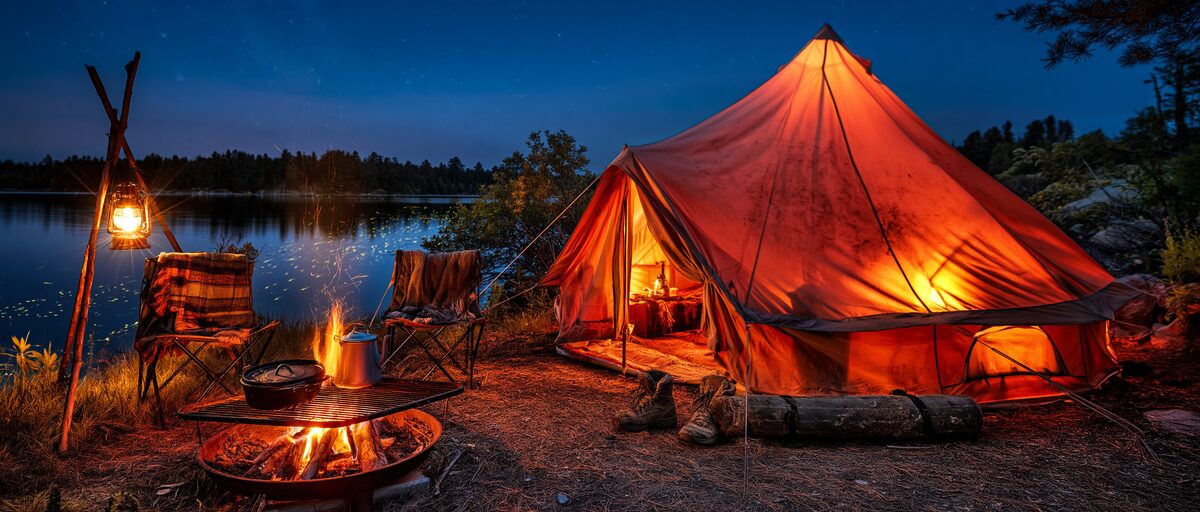
From lightweight one-person bivvy bags to spacious family tents, this section covers everything you need for shelter and a good night's rest outdoors. Hammocks, groundsheets, rooftop tents, sleeping bags, and camp beds are all here.

Camping Cooking & Kitchen - picture

Camping Cooking & Kitchen

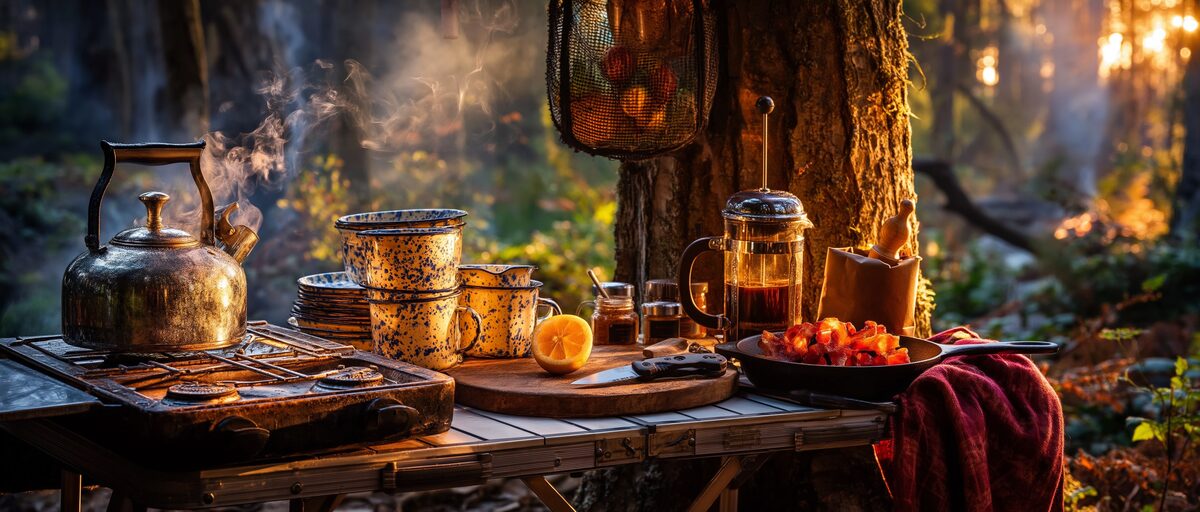
Whether you prefer a quick boil on a lightweight stove or slow-cooked meals over an open fire, this section has the equipment to keep you well fed outdoors. Stoves, cookware, cool boxes, BBQs, and everything for the camp kitchen.

The Art of the Three-Season Sleep System

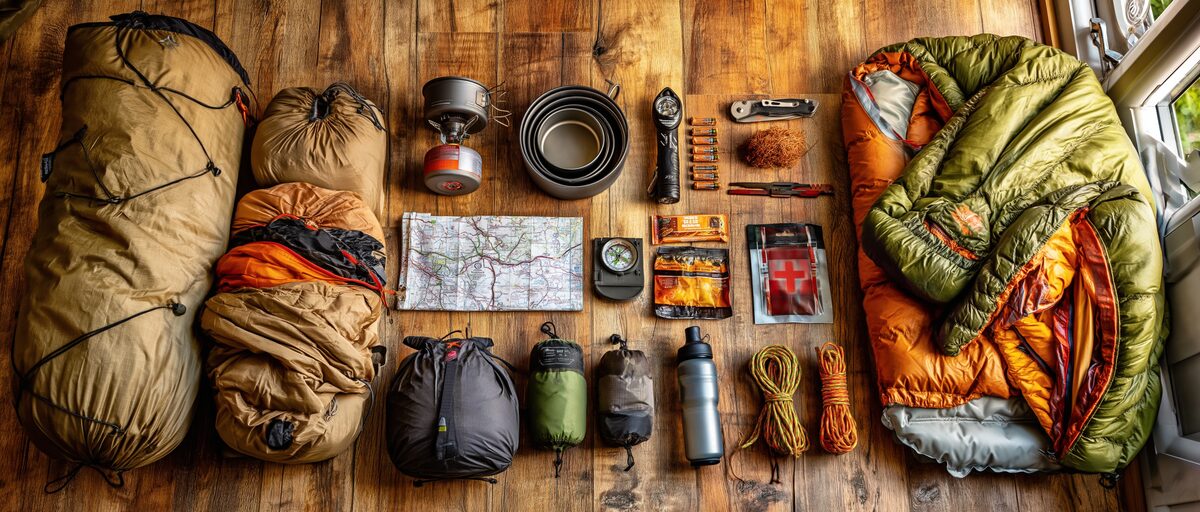
A warm, dry night's sleep changes everything about a camping trip. The difference between waking refreshed and lying awake shivering often comes down to how well your sleeping bag, mat, and liner work together as a system rather than as three separate purchases.

Sleeping bags are rated by season or temperature, but those numbers only tell part of the story. A four-season bag on a thin foam mat will feel colder than a three-season bag on an insulated air mat, because most heat loss happens downward through compression of the bag's fill. The R-value of your sleeping mat โ€” a measure of its thermal resistance โ€” matters just as much as the bag's comfort rating. For three-season use in the UK, an R-value of 3 to 4 paired with a bag rated to around zero degrees Celsius covers the vast majority of nights between March and October.

Layering for Versatility

Rather than buying one bag for summer and another for winter, experienced campers build a layered system. A lightweight liner adds several degrees of warmth inside any bag and can be used alone on the hottest nights. A silk liner weighs almost nothing and adds around five degrees. A fleece liner adds more warmth but also more bulk. By combining a good three-season bag with different liners, you can cover temperatures from mild summer evenings down to hard frosts without carrying multiple sleeping bags. Add a bivvy bag or waterproof shell for wild camping and the system becomes fully weatherproof.
Campsite Comfort & Hygiene

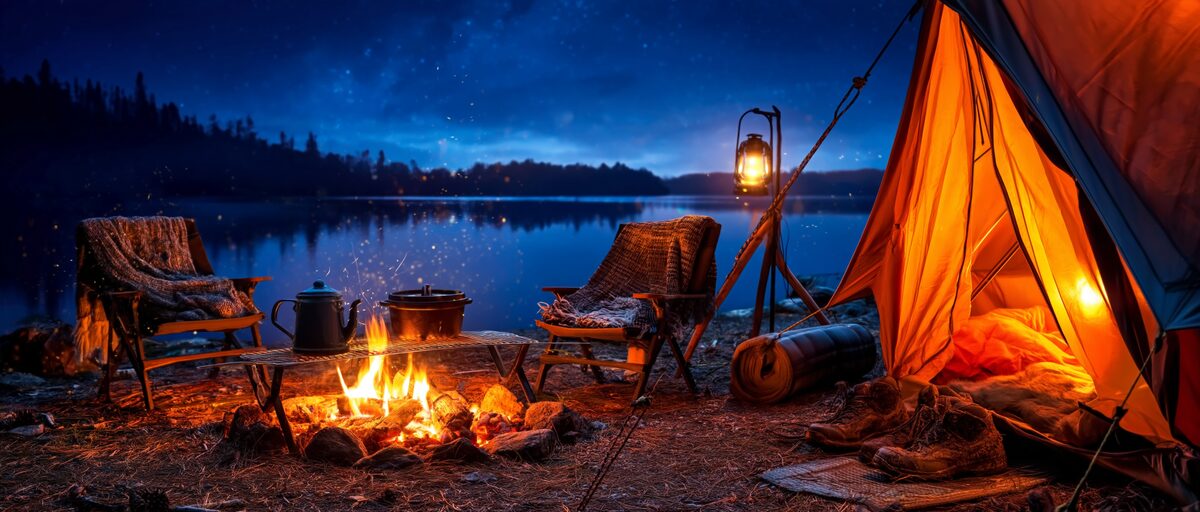
The details that turn a basic campsite into a comfortable home from home. Folding chairs, camping tables, awning accessories, portable showers, toilets, and hydration solutions.

Lighting, Power & Electrical

Keep your campsite lit and your devices charged. Headlamps for late-night walks, lanterns for the tent, solar panels for off-grid power, and gas equipment for cooking and heating.

Hiking, Walking & Trail Running - picture

Hiking, Walking & Trail Running

Boots, packs, poles, and performance gear for every kind of trail. Whether you are strolling through gentle countryside or tackling mountain ridges, the right footwear and equipment makes every step count.

Walking Britain's Long-Distance Trails: What Your Pack Actually Needs

The UK has some of the finest long-distance walking routes in the world โ€” the Pennine Way, the South West Coast Path, the West Highland Way, Hadrian's Wall Path โ€” and every year thousands of people set out to walk them. The difference between a memorable trip and a miserable one often comes down to what goes into the rucksack and, just as importantly, what gets left behind.

The single most common mistake is overpacking. A pack that weighs more than about a quarter of your body weight will slow you down, strain your knees on descents, and drain your enjoyment by the third day. Start by laying out everything you think you need, then remove a third of it. You almost certainly do not need a change of clothes for every day. Two sets of walking clothes โ€” one to wear, one to dry โ€” plus a single set of evening clothes covers a week-long trail comfortably. Merino wool base layers resist odour far better than synthetics, which means you can wear them longer between washes without offending fellow walkers.

The Non-Negotiable Items

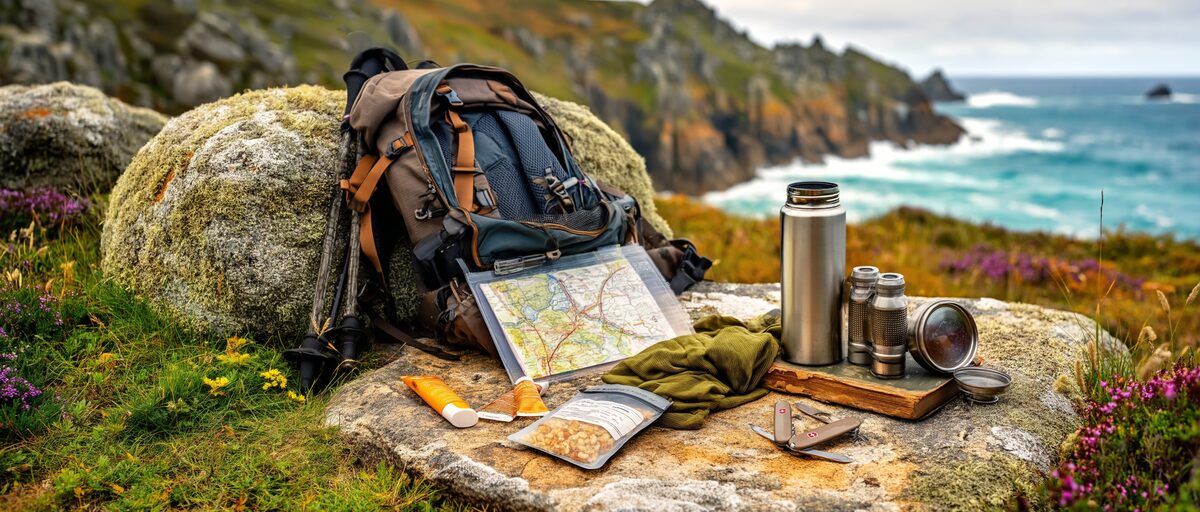
Waterproofs top the list regardless of the season. A breathable waterproof jacket and overtrousers weigh under 500 grams combined and will save a walk when the weather turns. A first aid kit with blister plasters, antiseptic, and anti-inflammatory tablets is essential โ€” blisters end more walks than bad weather. Navigation comes next: even if you carry a GPS device or use a phone app, a paper map and compass weigh nothing and never run out of battery. Finally, a head torch with spare batteries belongs in every pack. Days are shorter than expected when you factor in rest stops and route-finding, and walking the last mile to camp in darkness without a light is not an experience worth repeating.

Outdoor Clothing & Weather Protection - picture

Outdoor Clothing & Weather Protection

Layer up for any conditions. Waterproof jackets, insulating mid-layers, base layers, and specialist cold-weather gear to keep you warm and dry whatever the forecast.

Navigation, Communication & Optics

Find your way, stay connected, and see further. Maps, compasses, GPS devices, satellite communicators, outdoor watches, binoculars, and photography gear for documenting your adventures.

Reading the Land: Why Map and Compass Skills Still Matter

GPS devices and smartphone apps have made navigation easier than it has ever been, and for good reason โ€” a screen that shows your exact position on a detailed map is genuinely useful. But relying entirely on electronic navigation carries a risk that becomes obvious only when things go wrong.

Batteries die, screens crack, signals drop out in deep valleys and dense forests, and cold weather can drain a phone from fifty percent to zero in under an hour. Every mountain rescue team in the UK reports call-outs that began with a flat battery and a walker who had no idea which direction to head. A paper Ordnance Survey map and a baseplate compass weigh almost nothing, never need charging, and work in every weather condition including the kind of driving rain that makes touchscreens unusable.

The Basics Are Simpler Than You Think

Taking a bearing from a map and following it on the ground is a skill that can be learned in an afternoon and practised on every walk. Start by orienting the map to north using the compass needle, then identify features around you โ€” a hilltop, a stream junction, a wall corner โ€” to confirm your position. Once you can do this confidently, you can navigate in mist, at night, and across featureless moorland. The map also tells you things a GPS screen often does not: the steepness of terrain from contour spacing, the presence of crags or marshland, and alternative routes if your planned path is impassable. Electronic navigation is a brilliant tool. Paper navigation is the safety net that makes it safe to rely on.

Safety, Survival & Tools

Be prepared for the unexpected. First aid kits, emergency shelters, survival equipment, insect protection, wildlife safety gear, and multi-tools for every outdoor situation.

Caravan & Motorhome

Everything for the touring caravan and motorhome owner. Awnings, levelling equipment, electrical systems, heating, security, towing guides, interior furnishings, and winter storage solutions.

From Weekend Escape to Full-Time Van Life: What Nobody Tells You

The idea of converting a van and hitting the open road has captured imaginations worldwide. Social media is full of beautiful sunsets through open barn doors and coffee brewed with mountain views. The reality is more complicated than the photographs suggest, but for the people who make it work, it can be genuinely life-changing.

The first surprise is how much the conversion itself matters. A weekend campervan and a full-time home on wheels have very different requirements. Weekend use forgives a lot โ€” a basic bed platform, a portable stove, and a cool box will get you through two nights comfortably. Full-time living demands proper insulation (condensation will destroy an uninsulated van within a single winter), a reliable water system with at least forty litres of fresh water capacity, adequate ventilation to prevent damp, and a power system that can keep lights, a fridge, and device chargers running without shore power. Solar panels paired with a leisure battery and a battery-to-battery charger from the engine alternator is the standard setup for off-grid independence.

The Practical Realities

Heating is non-negotiable for British winters. A diesel heater running from the vehicle's fuel tank provides dry, reliable warmth and uses remarkably little fuel โ€” typically around a quarter of a litre per hour on a low setting. Without one, condensation builds up overnight, bedding gets damp, and the experience quickly becomes unpleasant. The other practicality that surprises people is waste. A portable cassette toilet and a disciplined grey water routine are essential unless you plan every stop around campsites with facilities. Many full-timers develop a rhythm: a mix of wild camping, aire-style stopovers, and occasional campsite nights for laundry and long showers. The freedom is real, but it works best when supported by thoughtful planning and the right equipment from the start.

Campervan & Van Life

Build your home on wheels. Water systems, cooking equipment, insulation, solar power, and everything you need to get started with campervan and van life.

Vehicle Storage & Transport

Get your gear to the great outdoors. Roof boxes, bike racks, cycle carriers, towing equipment, and vehicle storage solutions for motorhomes and campervans.

Wild Camping Responsibly: Leave No Trace on British Land

Wild camping โ€” pitching a tent away from official campsites, in open countryside โ€” is one of the most rewarding ways to experience the outdoors. Waking to birdsong beside a mountain loch or on a quiet hilltop with views stretching to the horizon is an experience no campsite can replicate. But the privilege of wild camping depends entirely on doing it responsibly.

In Scotland, the right to wild camp is enshrined in the Land Reform Act, provided you camp responsibly and away from enclosed land. In England and Wales, the legal position is more restrictive โ€” wild camping is technically only permitted on certain areas of Dartmoor and with landowner permission elsewhere, though a long tradition of considerate wild camping exists on high ground in national parks. Wherever you camp, the principle is the same: arrive late, leave early, and leave no trace. Pitch after the last dog walker has gone home, take down before the first one arrives, and carry out everything you carried in. No litter, no fire scars, no flattened vegetation. The test is simple: could the next person to walk past this spot tell that someone camped here? If the answer is no, you have done it right.

Practical Tips for Treading Lightly

Choose ground that is already durable โ€” short grass, bare earth, or gravel rather than fragile moss or heather. Avoid the temptation to dig drainage channels around the tent; a good site selection and a decent groundsheet make them unnecessary. For toilet needs, carry a lightweight trowel and dig a cat hole at least thirty metres from any water source and fifteen centimetres deep, then fill it in completely. Better still, carry a waste bag and pack everything out, especially in popular areas. Campfires should be avoided entirely in dry conditions and on peaty soil, which can smoulder underground for days. If you do have a fire, use a fire pan or existing fire ring, keep it small, burn only dead wood found on the ground, and make sure it is fully extinguished โ€” cold to the touch โ€” before you leave.

Boats & Waterways

Equipment for life on the water. Safety gear for boating, narrowboat and canal boat essentials, and everything for living afloat on Britain's rivers and waterways.

Specialty Camping & Adventures

Gear for specific camping styles and adventures. Family camping with children, dog-friendly gear, festival camping essentials, wild camping equipment, and overlanding expedition kits.

Ready to explore?

You've Done the Research.
Now Discover What's Waiting.

From weekend camping trips to long-distance trails, caravan holidays to full-time van life โ€” everything you need for your next outdoor adventure is waiting on Amazon. Browse the latest gear, compare options, and find exactly what suits your style of adventure.

Free delivery options available Deals change daily โ€” today's won't last Trusted by millions of shoppers worldwide